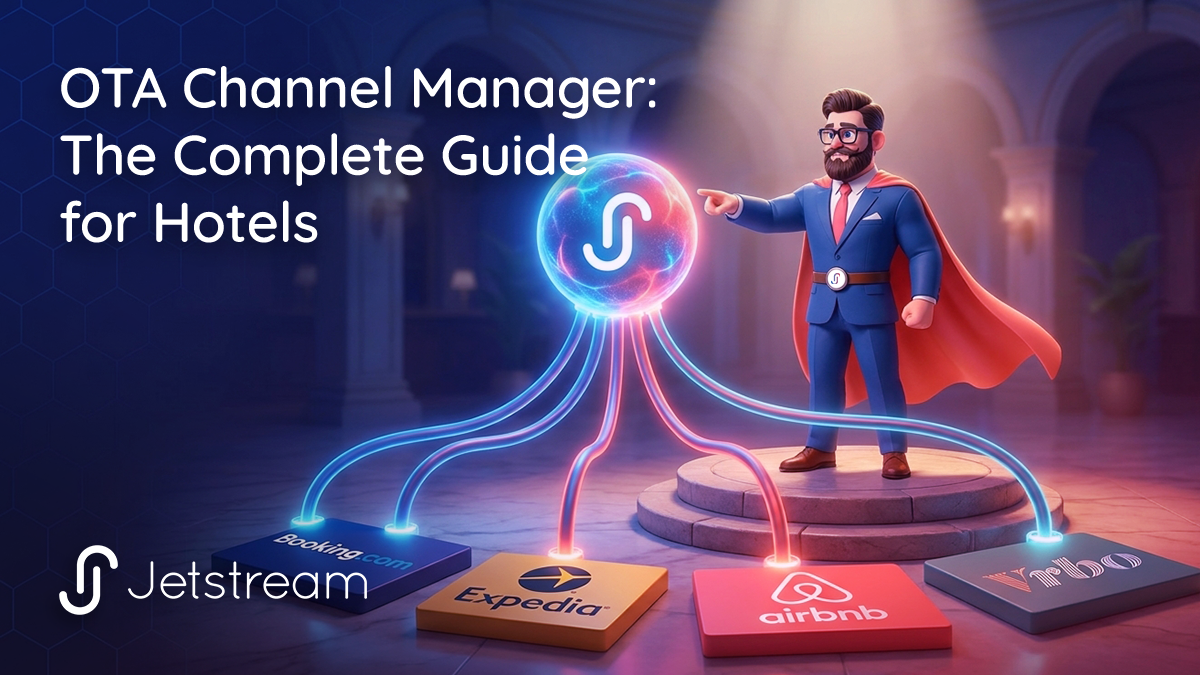
An OTA channel manager is software that connects a hotel's property management system to online travel agencies and short-term rental platforms, synchronizing rates, availability, and reservations across every channel in real time. If your hotel distributes inventory through Booking.com, Expedia, Airbnb, or VRBO (or plans to), a channel manager is the technology that keeps everything in sync without requiring your team to update each platform manually.
This guide explains what an OTA channel manager does, how it fits into the hotel technology stack, how it differs from a PMS, what it costs, and how to evaluate the right one for your property.
What Does an OTA Channel Manager Do?
At its core, a channel manager automates three things that hotels otherwise handle by hand.
First, it pushes rate and availability updates from your central system to every connected distribution channel simultaneously. When a room sells on Booking.com, the channel manager closes that room on Expedia, Airbnb, VRBO, and your direct booking engine within minutes. When you change your rate for next weekend, every channel reflects the new price without anyone logging into separate extranet dashboards.
Second, it pulls reservation data back into your PMS. When a guest books through Airbnb, the reservation details (name, dates, payment information, special requests) flow into your property management system automatically. The front desk sees the booking in the same system they use for direct reservations and Booking.com reservations.
Third, it manages the structural translation between platforms. Hotel rate plans, room types, and pricing models do not map one-to-one across OTAs and STR platforms. A channel manager handles the conversion so a “Deluxe King with Breakfast” rate plan in your PMS becomes a properly formatted listing on each connected channel, with the right pricing logic and policies applied.
The practical impact is significant. Properties managing channels manually spend two to three hours daily on updates across platforms, and a single overbooking incident can cost $200 to $500 or more in relocation fees and guest compensation. Channel management software reduces overbooking rates by up to 90% by keeping inventory accurate across all channels simultaneously.
How Does an OTA Channel Manager Work?
The technical workflow follows a consistent pattern across most channel management platforms.
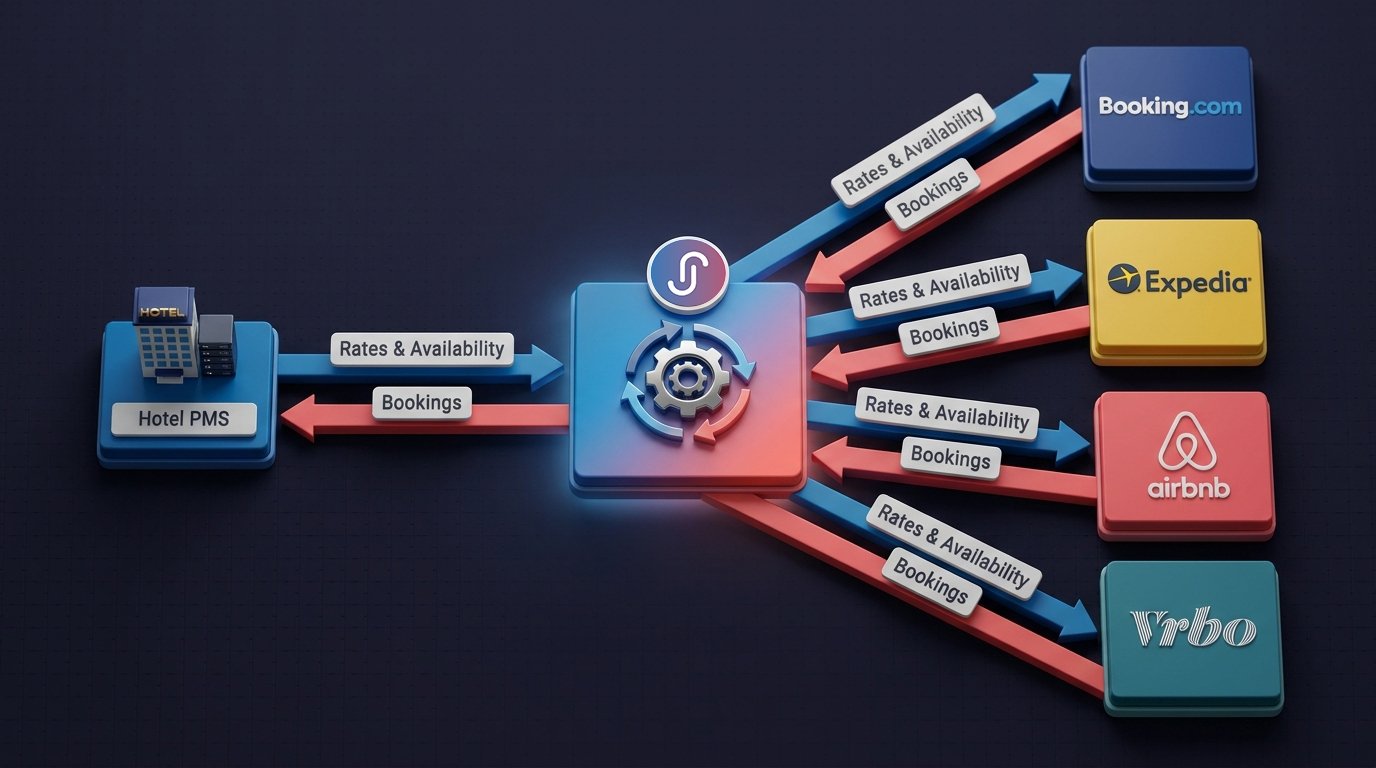
Your PMS serves as the central hub. It holds the master record of room inventory, rates, and reservations. The channel manager connects to the PMS via API (application programming interface), reading rate and availability data and pushing it to each connected OTA and STR platform through that platform's own API.
The data flow is bidirectional. Outbound: rates and availability push from PMS to channels. Inbound: bookings push from channels back to PMS. This two-way sync runs continuously, with most modern channel managers updating connected platforms within a few minutes of any change.
The complexity lives in the translation layer. Booking.com expects rate data in one format, Expedia in another, and Airbnb in a third. Each platform has its own rules for cancellation policies, tax handling, minimum stay requirements, and guest communication. The channel manager normalizes these differences so hotel staff only need to manage one set of rates and rules in the PMS, and the software handles the per-channel formatting.
For hotels distributing to both traditional OTAs and STR platforms like Airbnb, this translation becomes more important. The structural differences between hotel OTAs and STR platforms go beyond formatting: pricing models, commission structures, guest communication expectations, and review systems all work differently. A channel manager that supports both OTA and STR distribution handles these differences automatically.
What Is the Difference Between a PMS and a Channel Manager?
A PMS (property management system) and a channel manager serve different functions, and hotels need both to run distribution effectively.
The PMS manages internal hotel operations. It handles reservations, guest check-in and check-out, room assignments, housekeeping schedules, billing, and reporting. Think of it as the operating system for your property. Common hotel PMS platforms include Opera, SynXis, Cloudbeds, RoomMaster, and Mews.
The channel manager manages external distribution. It connects your PMS to the outside world: OTAs, STR platforms, GDS (global distribution systems), and metasearch engines. It ensures that what your PMS says about rates and availability is accurately reflected on every platform where guests can book.
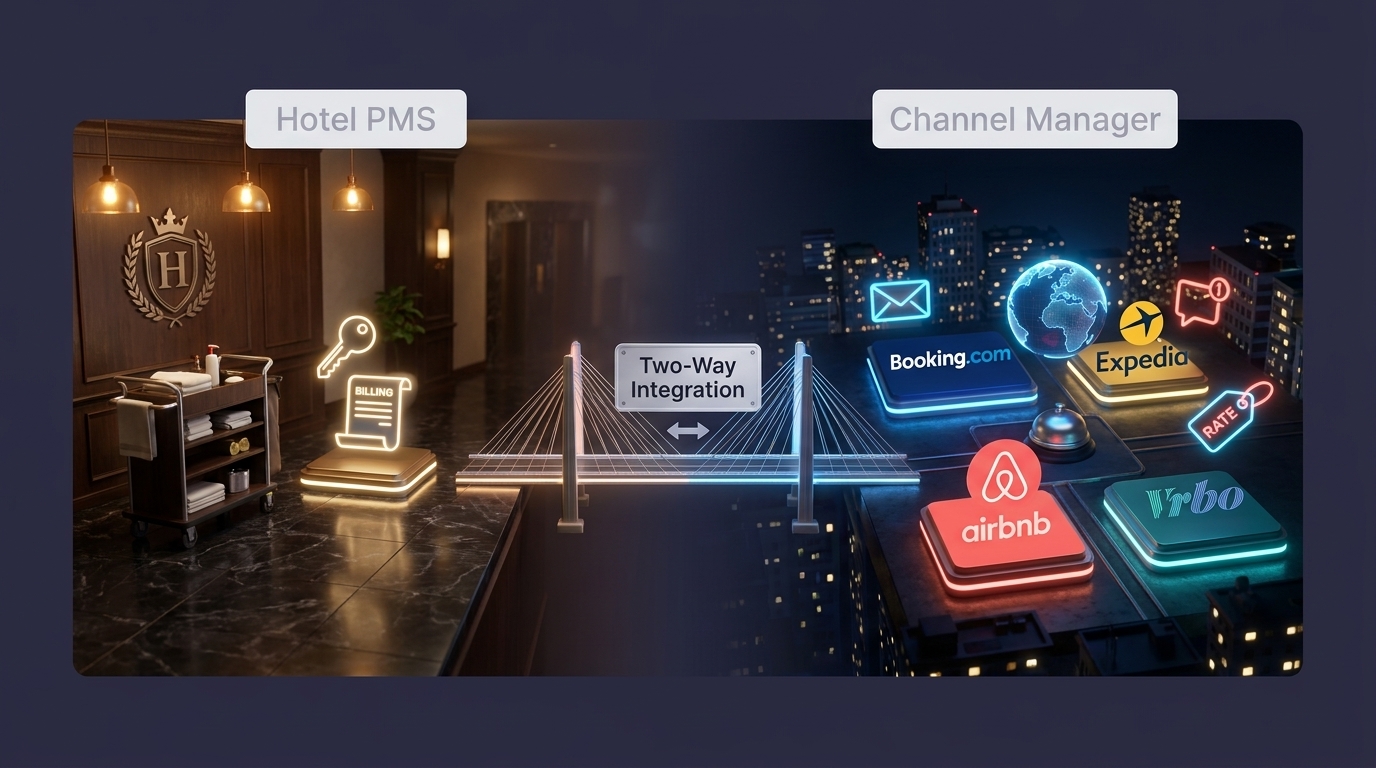
The two systems work together through integration. The PMS holds the truth; the channel manager broadcasts it. When a booking comes in from any channel, the channel manager sends it to the PMS, which updates internal inventory and triggers the channel manager to adjust availability on all other channels.
A common point of confusion is PMS platforms that bundle channel management features. Some modern PMS systems (Cloudbeds, Mews, and others) include built-in channel connections. This works well for hotels distributing to traditional OTAs, but the bundled channel management often lacks deep support for STR platforms like Airbnb and VRBO. Hotels expanding into STR distribution may need a specialized channel manager that handles the hotel-to-STR translation layer on top of their existing PMS.
Why Do Hotels Need an OTA Channel Manager?
The operational case is simple: manual distribution management does not scale.
A hotel with rooms on Booking.com, Expedia, and its own website already has three rate-and-availability feeds to keep synchronized. Adding Airbnb and VRBO brings the total to five. Each platform has its own extranet, its own rate entry format, and its own booking notification system. Managing this manually means logging into five dashboards every time a rate changes or a room sells, and doing it fast enough to prevent double bookings.
The financial case is equally clear. Overbookings cost money in guest relocations, compensation, and negative reviews. Stale rates cost money in lost revenue (rooms priced too low) or lost bookings (rooms priced too high relative to competitors). Delayed availability updates cost money in missed bookings when rooms that should be available show as sold out.
The strategic case is where the channel manager becomes a growth tool rather than just an efficiency tool. Hotels that want to expand distribution to Airbnb and other STR platforms need a channel manager that supports those connections. The revenue opportunity from STR distribution is real, but capturing it requires technology that handles the operational complexity. A channel manager makes Airbnb and VRBO operationally equivalent to Booking.com and Expedia from the hotel's perspective: another channel in the mix, managed through the same system.