A boutique hotel Airbnb listing may sound like an unlikely pairing, but the relationship between boutique properties and the platform has evolved quickly. Airbnb launched a dedicated pilot program in 2026 to bring independent and boutique hotels into its marketplace across New York, Los Angeles, Paris, and Madrid. The company also appointed Jesse Stein as head of hotels in January 2026 to lead the expansion. For boutique hotel operators weighing their distribution options, this shift creates an opportunity worth understanding.
This guide covers what qualifies as a boutique hotel on Airbnb, why these properties tend to outperform generic listings, and how to manage the operational side without creating chaos for your front desk.
What Is a Boutique Hotel on Airbnb?
Airbnb defines a boutique hotel as a small, independently operated property with distinctive character, design, or local identity. The platform groups boutique hotels into its hospitality category alongside other commercial accommodation types like hostels, resorts, and serviced apartments.
What distinguishes a boutique hotel listing from a standard vacation rental is primarily the property type classification and the guest expectations that come with it. Guests searching for an Airbnb boutique hotel expect a curated experience: thoughtful interior design, personalized service, and a connection to the neighborhood or destination. They are looking for something between a generic hotel chain and a private home rental, and that positioning is where boutique properties naturally excel.
The practical difference for operators is that boutique hotel listings on Airbnb are subject to hospitality-specific standards. These include requirements around guest communication response times (Airbnb tracks whether hosts respond within one hour, and that metric directly affects search ranking), cancellation policies, and on-site service expectations.
Why Boutique Hotels Thrive on Airbnb
The alignment between boutique hotels and Airbnb's platform is structural.
Airbnb's entire brand identity revolves around unique, locally rooted experiences. The platform's search algorithm and review system reward properties that stand out from commodity inventory. Boutique hotels, by their nature, offer exactly that: distinctive architecture, curated interiors, a story about the building or the neighborhood, and staff who know the area personally.
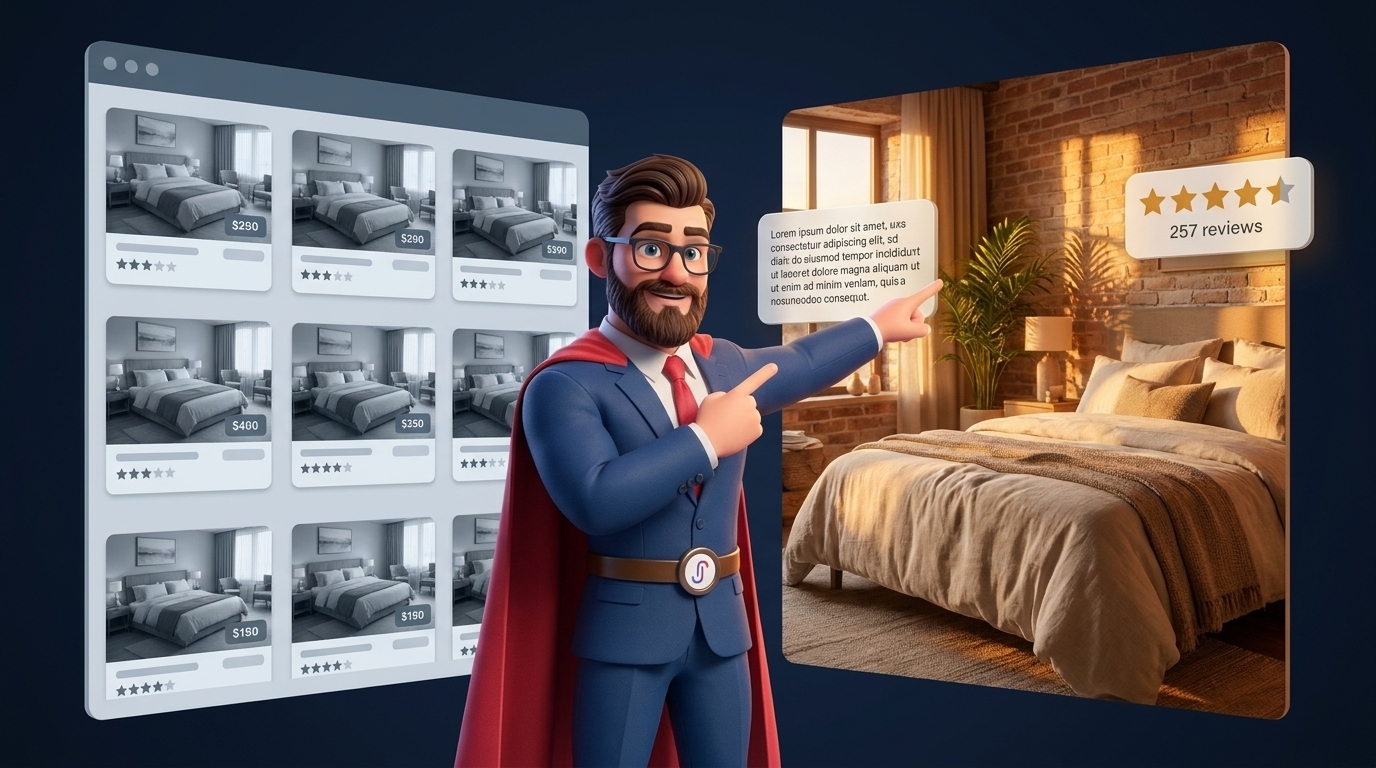
Traditional OTAs like Booking.com and Expedia were built for standardization. Their search interfaces favor price comparison and amenity checklists, which advantages chain hotels with consistent room products across hundreds of locations. Boutique properties often get lost in those listings because their differentiators (design, atmosphere, personality) are hard to convey through dropdown filters and star ratings.
On Airbnb, the listing format works differently. Guests scroll through full-screen photography, read narrative descriptions, and browse guest reviews that often describe the feel of a stay rather than just the amenities. A 12-room boutique hotel in Charleston with exposed brick, local art, and a rooftop garden can tell its story on Airbnb in a way that never translates on Booking.com's standardized listing template.
Guest demographics reinforce this fit. Airbnb's user base skews toward travelers who prioritize experience over brand loyalty, who book longer stays, and who are willing to pay a premium for something distinctive. For boutique hotel operators, that is the ideal guest profile.
Boutique Hotel vs Airbnb: From Competition to Distribution
The boutique hotel vs Airbnb narrative used to frame these as competitors. Boutique hotels offered the personality and local charm that Airbnb rentals also promised, so the two felt like substitutes.
That framing has shifted. Airbnb's expansion into professional hospitality means boutique hotels can now use Airbnb as a distribution channel rather than viewing it purely as competition for the same traveler. The broader trend of hotels listing on Airbnb has moved well beyond experimentation, and boutique properties are among the best positioned to benefit because their product already matches what Airbnb guests search for.
The revenue diversification argument applies here too: reducing dependence on Booking.com and Expedia, accessing a different guest segment, and adding a distribution line that performs especially well during leisure travel seasons and for longer stays. The differences between STR platforms and traditional hotel OTAs mean Airbnb reaches travelers that Booking.com does not fully serve, and vice versa.
Managing Airbnb Distribution for Your Boutique Hotel
The operational challenge for boutique hotels on Airbnb is the same one facing any hotel expanding to STR platforms: keeping rates, availability, and reservations synchronized across all channels in real time.
Boutique hotels typically run on smaller PMS systems compared to major chains, and many of those systems were not originally built to connect to Airbnb or VRBO. Without automated channel management, adding Airbnb means manually updating availability after every booking, adjusting rates across platforms separately, and copying reservation data into the PMS by hand. For a 15-room boutique hotel during peak season, that manual workload becomes a real constraint on the team.
Channel management technology built for hotel-to-STR distribution solves this by connecting the property's existing PMS directly to Airbnb and VRBO. Rates flow automatically. Bookings update inventory across all channels in real time. Guest reservation data lands in the PMS without manual entry. The integration layer handles the structural differences between hotel rate plans and Airbnb's pricing model, so the front desk operates the same way regardless of which channel produced the booking. Jetstream specializes in this exact integration for hotels and resorts, connecting systems like SynXis, Opera, and TravelClick to Airbnb and VRBO without requiring properties to rebuild their existing tech stack.
For boutique hotels exploring this distribution channel, the technology investment is what separates a sustainable Airbnb presence from a manual side project that breaks down during busy periods.

Boutique hotels are built to deliver the kind of experience Airbnb guests are searching for. The platform's expansion into professional hospitality has created a clear path for operators who want to reach new travelers, diversify revenue, and compete on character rather than price. Whether you are listing your first room or scaling an existing Airbnb presence, the fundamentals come back to the same thing: show guests what makes your property worth staying at, and let the technology handle the distribution logistics.