If you've decided that Airbnb belongs in your hotel's distribution mix, the next question is the practical one. How do you actually list a hotel on Airbnb without breaking your existing operational workflow? This guide walks through the full process: the account setup, the listing requirements, the pricing decisions, and the operational integration with your PMS and traditional OTA channels. By the end you'll know exactly what to do, what Airbnb requires of hotels, and how to keep the platform in sync with the rest of your distribution stack.
Can Hotels List on Airbnb?
Yes, hotels can list on Airbnb. The platform runs a dedicated category for hotels and other hospitality businesses, and Airbnb has been actively expanding its hotel inventory through 2025 and into 2026.
The properties accepted include boutique hotels, independent hotels, resorts, B&Bs, hostels, and serviced apartments. Major branded hotels participate too, often through professional hosting tools designed for multi-room operators. The key requirement is that your property qualifies as a hospitality business, which means you operate to consistent service standards and follow Airbnb's hospitality category requirements.
The difference between a hotel listing and a typical Airbnb vacation rental listing matters operationally. Hotel listings follow Airbnb's hospitality standards (specific guest communication expectations, professional hospitality cancellation policies, and on-site service standards). Vacation rental listings follow a different rule set. For a hotel, the hospitality category is almost always the right starting point because it accurately reflects the product.
What You Need Before You Start
Before you create the listing, get a few things in order. Rushing past this step is the most common reason hotel listings underperform on Airbnb in their first 90 days.
You need a host account configured for professional hosting. This unlocks Airbnb's professional tools: multi-room management, advanced calendar controls, performance reporting, and the ability to integrate with channel management software through the Airbnb API.
You need photography that fits Airbnb's audience. The photos that work on Airbnb are not the photos that work on Booking.com. Airbnb travelers respond to lifestyle imagery (rooms with morning light, lobbies that look lived in, common spaces with people in them). Catalog-style hotel photography (the static, perfectly composed empty room) reads as commodity inventory on Airbnb. Plan for a photo refresh or new shoot before launch.
You need property details mapped out: amenities (the full list, not just the obvious ones), check-in and check-out process, house rules, cancellation policy, and a clear description of who the room is best suited for. Airbnb's algorithm rewards detailed, complete listings; missing fields hurt search visibility.
You need a pricing strategy. Airbnb pricing isn't your Booking.com rate transferred over. Airbnb travelers compare your room against vacation rentals, so the right rate often differs from your traditional OTA rate. Decide whether you'll match your OTA pricing, set Airbnb at a premium for unique inventory, or differentiate by length of stay.
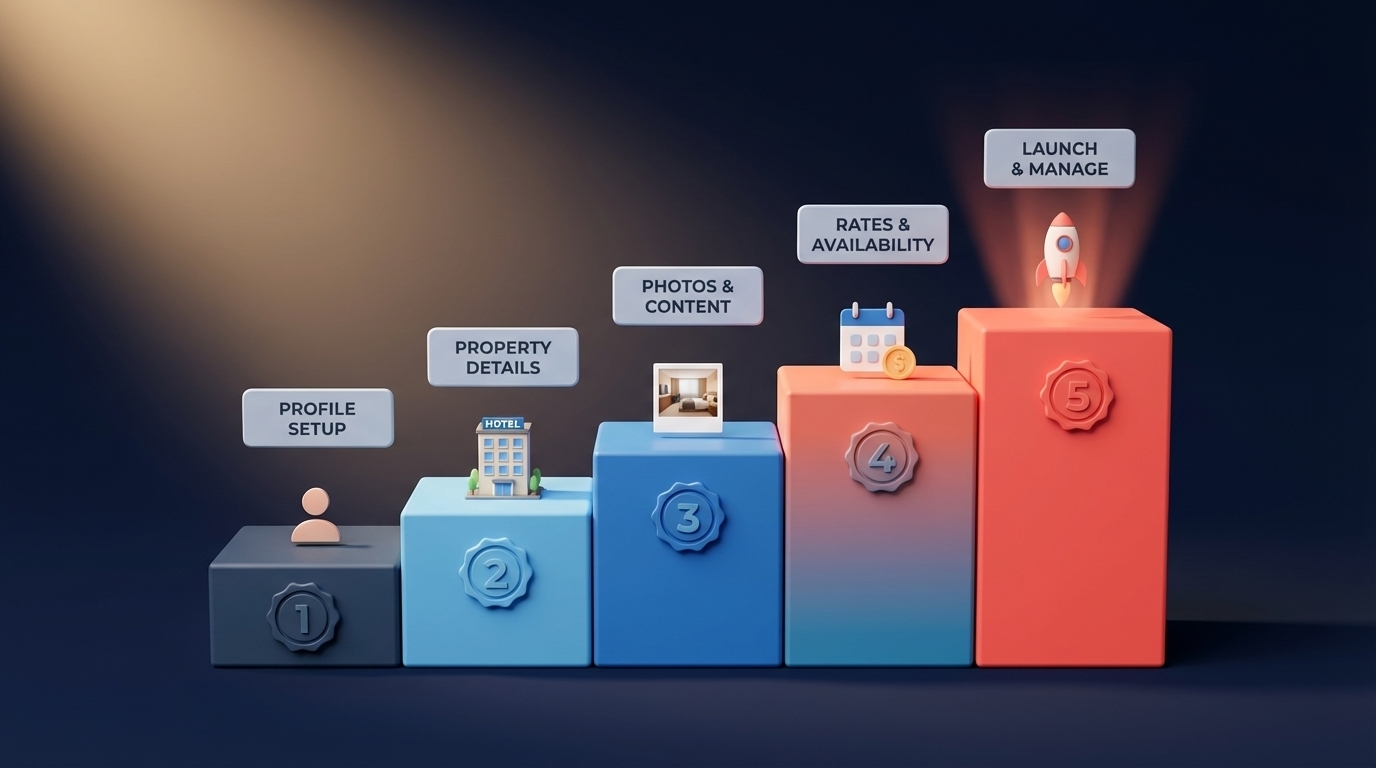
Step-by-Step: How to List Your Hotel on Airbnb
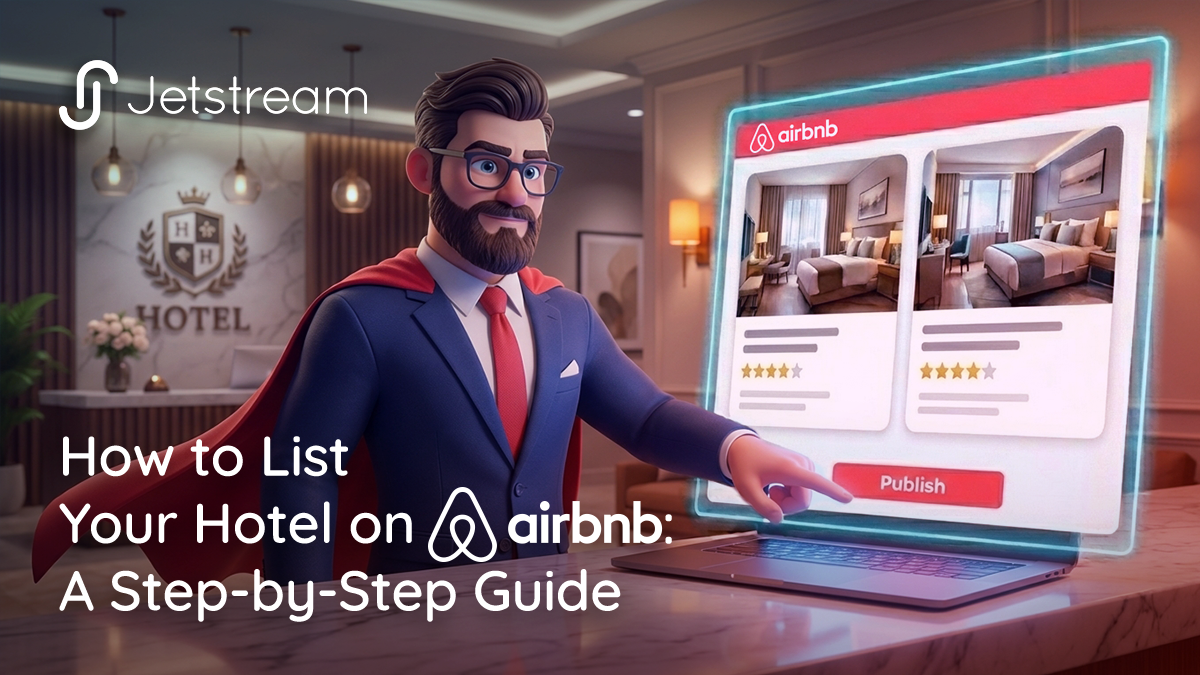
The setup process for hotels on Airbnb runs through five distinct steps. Each one matters; skipping any of them tends to surface as a problem during the first booking week.
Step 1: Create your professional host account. If you already have a personal Airbnb host account, upgrade it to professional hosting. If you're starting fresh, sign up directly for the professional hosting flow. This is where you'll register your business details and confirm you operate as a hospitality business.
Step 2: Choose your listing type. Airbnb offers several hospitality listing categories: hotel, boutique hotel, hostel, resort, serviced apartment, aparthotel. Pick the category that matches your actual property. The choice affects which search filters surface your listing and which guest expectations apply.
Step 3: Build the listing. Add your photos, write the description, list amenities, set house rules, and configure check-in details. Airbnb's listing editor walks you through each section. Hotels with multiple room types have a structural decision here: list each room category as a separate listing, or list the property once with multiple room types inside it. Both work; the right choice depends on how much volume you want from Airbnb and how your channel manager handles inventory sync.
Step 4: Set pricing and availability. Set base nightly rates, minimum stay requirements, cancellation policy, and any additional fees (cleaning, resort fees if applicable). For hotels new to Airbnb, starting with a competitive base rate and adjusting based on early performance is more reliable than trying to optimize from day one.
Step 5: Publish and start optimizing. Once published, your listing enters Airbnb's search index. The first 30 days are the most important; Airbnb's algorithm prioritizes new listings to gather performance data, so early bookings and reviews carry disproportionate weight. Respond to inquiries quickly, deliver consistent guest experiences, and adjust pricing based on what you learn.
How to Automate Your Airbnb Distribution with a Channel Manager
The hotels making Airbnb work as a real distribution channel are not running it manually. They're using channel management technology specifically built to bridge hotel PMS systems and short-term rental platforms.
 and Expedia through a channel manager](https://blog.jetstreamtech.io/hs-fs/hubfs/AH-3-02.png?width=1376&height=768&name=AH-3-02.png)
The integration handles three core jobs. It pushes rates and availability from your PMS to Airbnb in real time, translating hotel rate plans into the format Airbnb's API expects. It pulls bookings from Airbnb back to your PMS and closes the inventory across all your other channels simultaneously. It syncs reservation data so guest information, payment details, and stay details land in your central system without manual entry.
Jetstream specializes in this layer for hotels. The platform connects hotel PMS systems like SynXis, Opera, and TravelClick directly to Airbnb and VRBO, so hotels can list on Airbnb without rebuilding their existing tech stack. The SynXis Airbnb integration, for example, gives SynXis-powered hotels a direct path to Airbnb distribution without changing how their reservations team works day to day.
Without this integration layer, listing hotel rooms on Airbnb is an experiment with a low ceiling. With it, Airbnb behaves like every other channel in the distribution mix: rates flow automatically, availability stays synchronized, and your front desk works from one set of reservations.
Tips for Hotel Success on Airbnb
A few habits separate hotels that thrive on Airbnb from hotels that limp along.
Optimize for Airbnb's search algorithm. Response rate, response time, review score, and listing completeness all feed search ranking. Hotels that respond to inquiries within an hour, maintain a 4.7+ review average, and keep their listings updated tend to surface higher in search results.
Treat photography as ongoing work. The first photo set you publish is rarely your best. Update photos based on what guests respond to, refresh seasonal imagery, and add photos of guest experiences (with permission) where it makes sense.
Price for Airbnb's audience. Don't just mirror your Booking.com rate. Airbnb travelers often book longer stays, so a slightly different per-night structure (lower nightly rate, longer minimum stay, or weekly discount) can produce higher revenue per booking than a flat rate strategy. Pulling this off well is partly a hotel rate plan adaptation problem; getting the rate structure right is one of the highest-leverage things a hotel can do on Airbnb.
Manage guest expectations. Airbnb travelers expect different things from a hotel stay than Booking.com travelers do: more communication before arrival, more local recommendations, more lifestyle context. Hotels that lean into that style of hosting outperform hotels that treat Airbnb as just another booking channel.
Start small, scale based on data. Most hotels listing rooms on Airbnb succeed by starting with their best inventory (the suites, the condo units, the rooms that fit Airbnb's audience), running the listings for a few months, and expanding based on actual performance. Going all-in on day one is rarely the right move.
Following the steps above, with the operational integration handled by a proper channel management layer, a hotel can list on Airbnb and start capturing demand within days. The path from listing publication to consistent revenue is well-marked at this point. Hotels that take Airbnb seriously as a distribution channel and invest the operational effort to run it properly are the ones turning these listings into a meaningful revenue line.
Hotels exploring Airbnb and VRBO distribution can learn more about how hotel revenue management and channel distribution connects hotel systems to short-term rental platforms.
Our top picks |
|
|

READ: How Jetstream Powers Vail Resorts’ Airbnb and VRBO Strategy |

WATCH: CEO of Jetstream Shares Growth Tips for Airbnb & VRBO |