2026 Marketing Trends to Actions (and how STR fits in)
Hotel marketing in 2026 is no longer about optimising individual channels. It is about hedging demand and protecting revenue.
The environment has changed. Demand is fragmenting. Distribution costs are rising. Labour remains constrained. At the same time, over-reliance on a small number of channels increases risk when booking behaviour shifts or costs spike.
As a result, marketing and revenue teams are being asked to do more than drive volume. They are being asked to diversify demand, improve booking value, and support operational efficiency.
That is where this blog comes in.
This article breaks down the top 10 hotel marketing trends shaping 2026, with a clear focus on what is changing, why it matters, and what teams should do next. Each trend includes a concrete action, not just an observation.
You will also see where short-term rental (STR) demand fits across these trends. Not as a replacement for OTAs or direct channels, but as a demand hedge that captures longer stays, different booking windows, and higher booking value.
If your 2026 strategy still relies on optimising the same channels harder, these trends will feel uncomfortable. If your goal is to build a more resilient, value-driven demand mix, they will feel necessary.
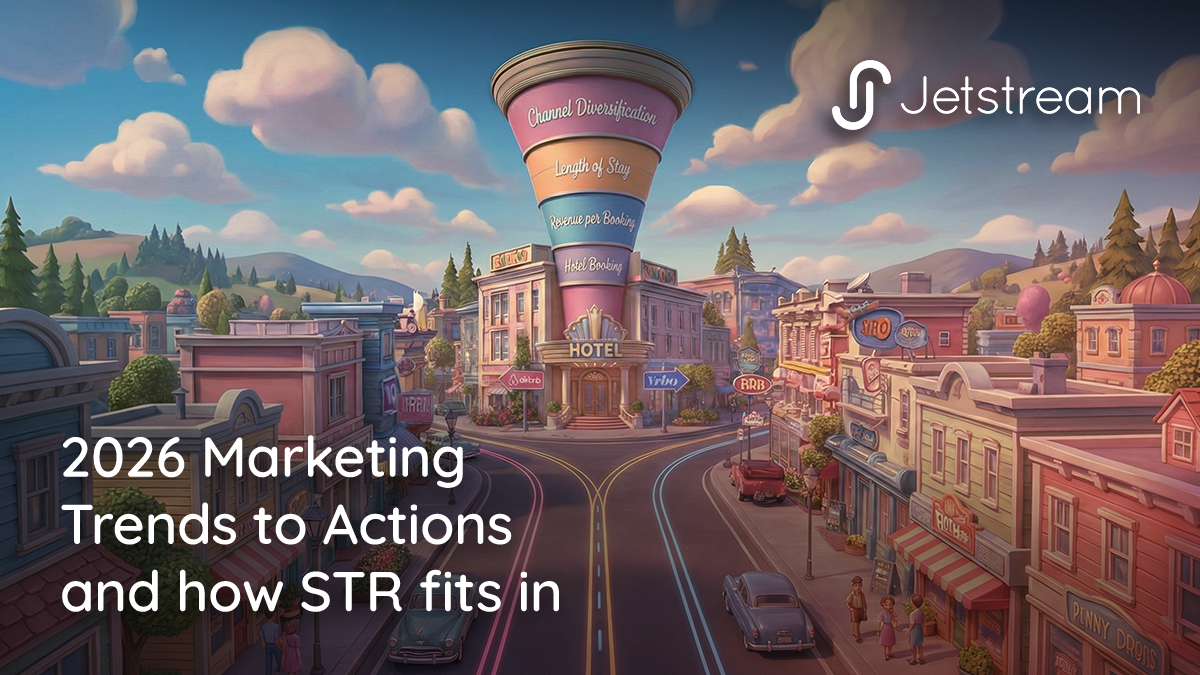
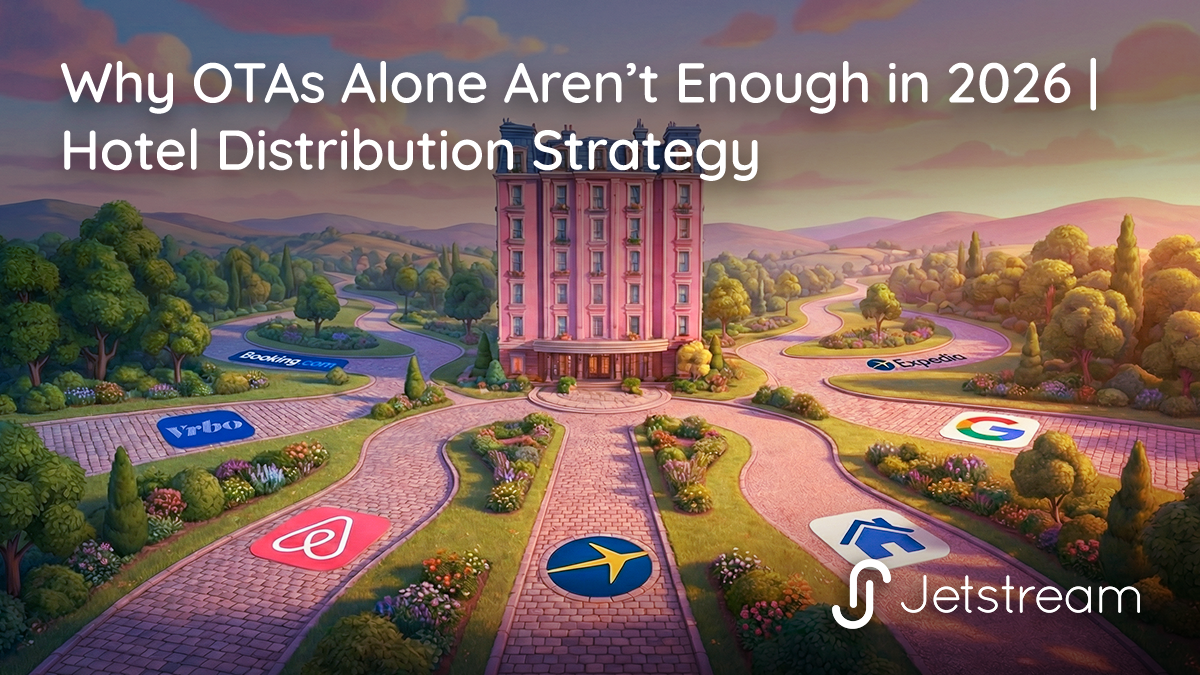
1. Channel Diversification Becomes a Core Marketing Goal
In 2026, channel diversification is a marketing KPI, not a side project.
OTAs still deliver short-stay demand efficiently. The issue is over-concentration. As OTA share grows, distribution cost and margin risk grow with it.
Action: Set channel caps and diversification targets alongside conversion goals.
Where STR fits: STR channels capture longer stays and incremental demand that OTAs under-deliver, helping marketing teams spread risk without cannibalising direct bookings.
This shift turns channel mix from an operational concern into a strategic advantage.
2. Length of Stay Becomes a Marketing KPI
In 2026, driving longer stays matters as much as driving bookings.
For a long time, marketing success was measured by clicks and conversions. That is no longer enough. Hotels now care about how long guests stay, not just whether they book.
Longer stays increase total booking value and reduce operational pressure. And the demand is already there. Airbnb reports that 28+ day stays now account for roughly 17–18 percent of bookings, driven by hybrid work and extended leisure travel.
That shift changes how marketing works.
What to do:
Market weekly and extended stays intentionally. Lead with value over time, not just nightly price.
Where STR fits:
STR platforms attract longer-stay intent by default. When managed correctly, this demand increases booking value without increasing OTA dependence. Jetstream helps hotels integrate this demand in a controlled way as part of a broader distribution strategy.
3. Revenue per Booking Replaces ADR as a Core Metric
ADR no longer tells the full performance story.
ADR ignores length of stay, distribution cost, and labour impact. Two bookings with the same ADR can produce very different results.
That is why marketing and revenue teams are shifting toward revenue per booking as a core metric.
Industry data backs this up. SiteMinder’s hotel booking trends show that direct bookings generate higher average revenue per booking than OTA bookings, largely because they include longer stays and fewer fees.
Revenue per booking captures what ADR misses:
- Length of stay
- Total booking value
- Channel efficiency
What to do:
Add revenue per booking and LOS by channel to marketing performance reviews.
Where STR fits:
STR demand often delivers higher booking value even when nightly rates are similar. This makes STR a practical hedge against margin pressure, especially in OTA-heavy mixes. Jetstream’s recent insights explore this dynamic in more detail.
4. Marketing Teams Own Demand Quality, Not Just Volume
In 2026, not all demand is created equal.
High volumes of short stays increase turnover, staffing pressure, and cost per occupied night. That makes demand quality a shared concern between marketing, revenue, and operations.
Labour constraints make this unavoidable. The American Hotel & Lodging Association continues to identify staffing shortages as one of the industry’s biggest challenges, increasing the value of bookings that stay longer and turn over less frequently.
Marketing teams can no longer focus on volume alone.
What to do:
Prioritise campaigns that attract longer stays and lower cancellation risk, especially during peak labour strain.
Where STR fits:
STR-style demand reduces housekeeping frequency and operational pressure while increasing total booking value. Jetstream helps marketing teams align demand generation with operational reality by integrating STR demand into hotel-friendly workflow.
5. STR Platforms Become Hotel-Compatible Channels
STR platforms are no longer just alternatives to hotels. They are becoming hotel-compatible distribution channels.
This shift is already underway. Airbnb has piloted hotel listings in major markets, signalling that certain hotel inventory fits STR demand patterns, not just vacation rentals. Skift has reported these pilots across cities like New York and Los Angeles.
Action: Define which room types and rate plans are suitable for STR demand instead of treating STR as off-limits.
Where STR fits: STR channels expand reach to longer-stay and intention-driven travellers that OTAs underperform. Jetstream enables hotels to access this demand without disrupting direct bookings or existing workflows.
6. Booking Windows Polarise: Very Short and Very Long
In 2026, booking windows are splitting between last-minute stays and extended planning horizons.
Short, spontaneous trips continue to perform well on OTAs. At the same time, longer stays are planned further in advance and behave differently in the funnel.
This polarisation changes how marketing works.
Action: Build campaigns specifically for long-planning travellers, including content that speaks to extended stays, remote work, and flexible use of space.
Where STR fits: STR platforms attract travellers planning longer stays weeks or months ahead, giving hotels access to demand that sits outside traditional OTA booking windows. Jetstream helps hotels participate in this demand without fragmenting their marketing stack.
7. Paid Media Efficiency Declines
Paid media is becoming more expensive and less predictable.
Competition for high-intent hotel keywords continues to drive up acquisition costs, especially in OTA-dominated search results. Simply increasing spend is no longer a sustainable strategy.
Action: Hedge demand sources instead of bidding harder by diversifying where bookings originate.
Where STR fits: STR platforms deliver incremental demand without relying on paid search auctions, reducing exposure to rising media costs. Jetstream’s distribution approach supports this diversification by expanding reach beyond paid channels.
8. Marketing and Revenue Teams Fully Converge
In 2026, marketing and revenue operate as a single function.
Siloed KPIs no longer work. Marketing decisions directly affect pricing power, length of stay, and operational efficiency, which makes shared accountability unavoidable.
Action: Align dashboards around channel mix, revenue per booking, and LOS instead of separating marketing and revenue metrics.
Where STR fits: STR performance must be evaluated across marketing, revenue, and operations. Jetstream supports this convergence by providing a unified view of how STR demand impacts overall performance.
9. Portfolio-Level Strategy Replaces Property-Level Tactics
Hotel groups are shifting from property-by-property tactics to portfolio-wide strategy.
Not every asset should use the same channels in the same way. Resort, lifestyle, and extended-stay-friendly properties behave differently than urban transient hotels.
Action: Assign channel roles by asset type instead of applying uniform distribution rules.
Where STR fits: STR demand performs best in select asset types, making it a portfolio tool rather than a blanket strategy. Jetstream helps operators deploy STR selectively across portfolios without adding complexity.
10. Strategy Moves from Static Plans to Ongoing Workshops
Fixed marketing playbooks cannot keep up with market change.
Demand patterns, booking windows, and channel performance shift too quickly for annual plans to stay relevant.
Action: Replace static strategies with regular trend-to-action reviews that translate market signals into execution.
Where STR fits: STR demand flexes with market conditions, making it a practical lever in ongoing strategy adjustments. Jetstream supports this approach by turning distribution data into actionable insights:.
The Next Step: Building a Resilient Demand Strategy
Hotel marketing in 2026 is no longer about chasing more demand. It is about managing risk and capturing value.
The teams that win will not be the ones optimizing a single channel harder. They will be the ones building balanced demand portfolios, increasing length of stay, and improving revenue per booking while reducing operational strain.
STR fits into this shift as a demand hedge. Not a replacement. Not a side project. A strategic lever.
Trend-to-Action Workshop
Hotel marketing is shifting from channel optimization to demand resilience. If you want to translate these trends into practical, portfolio-level strategy, the next step is clarity.
Jetstream’s trend-to-action workshop helps marketing and revenue teams map where STR fits, quantify incremental demand opportunities, and build a balanced channel mix without cannibalizing direct bookings.