The airbnb vs hotel conversation has changed. A few years ago it was a simple consumer debate: where should I book my next trip? Today it's something more interesting. Hotels are listing their rooms on Airbnb. Airbnb is building hotel categories. The line between these two worlds is dissolving, and the operators who see this shift early are the ones capturing new revenue.
This post breaks down what the data actually shows about hotels versus Airbnb, why travelers are choosing one over the other, and what hotel operators can do about it. The short version: the smartest operators aren't picking a side, they are playing both.
The Airbnb vs Hotel Debate: What the Data Actually Shows
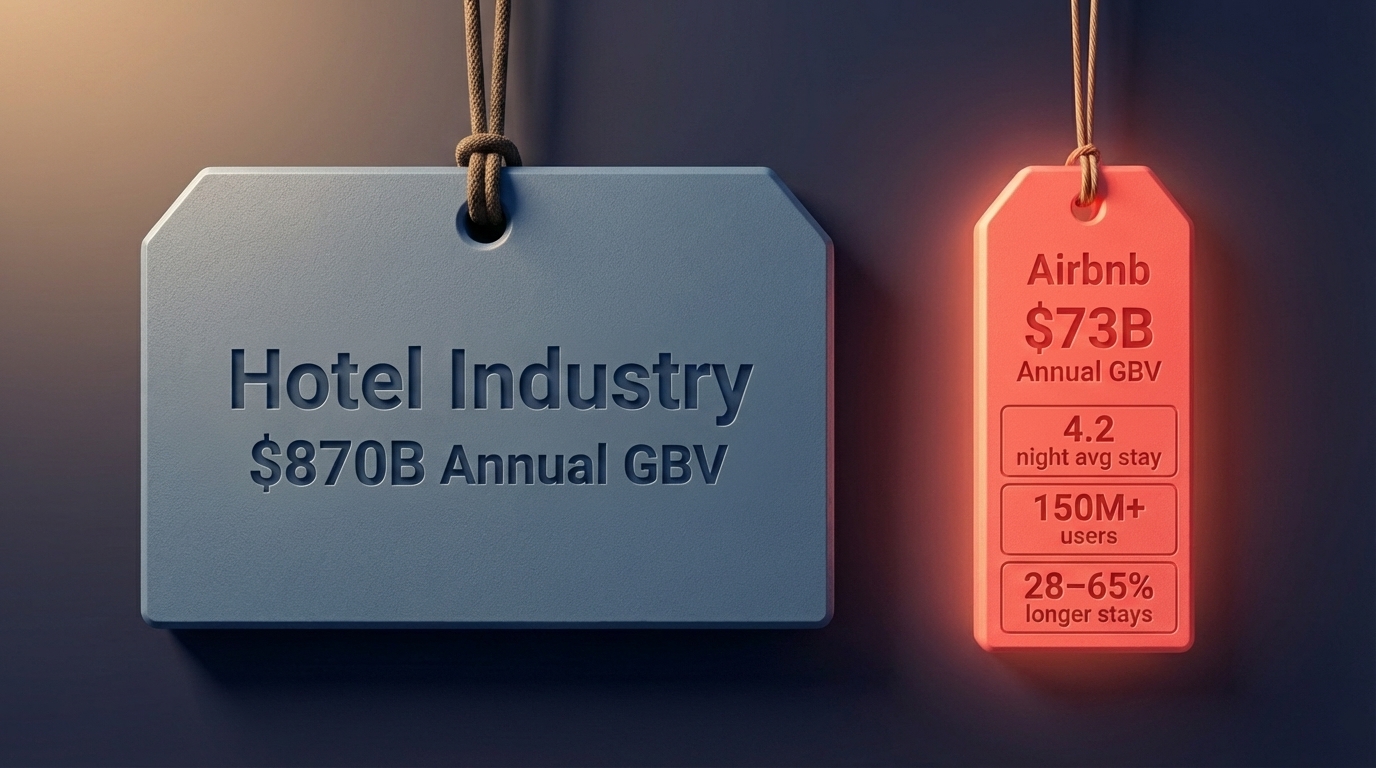
The global hotel industry generates roughly $870 billion in annual revenue. Airbnb's gross booking value crossed $73 billion in 2024. Those numbers aren't directly comparable (Airbnb is a marketplace, not an operator), but they tell you something important: Airbnb is no longer a scrappy alternative to hotels. It is a primary distribution channel for accommodation worldwide.
Here's what matters for operators. Airbnb's fastest-growing segment isn't urban apartments or remote cabins. It's professionally managed properties, including hotels. In early 2026, Airbnb confirmed that its hotel strategy is now "much bigger" than simply filling gaps when homes are booked, with hotel night bookings growing at nearly double the rate of the overall platform. The company is actively partnering with boutique and independent hotels in major markets and plans to make hotels a meaningfully larger share of its business by the end of 2026.
Meanwhile, hotel occupancy in many leisure markets has plateaued. The traditional OTA channels (Booking.com, Expedia) deliver reliable demand but at climbing commission rates and within an increasingly crowded marketplace. Hotels looking to fill shoulder season gaps or reach new guest demographics have a practical reason to stop treating Airbnb as a competitor and start treating it as an untapped distribution channel. The differences between STR and hotel OTAs make this a different kind of opportunity than adding another traditional booking site.
Is It Cheaper to Stay in an Airbnb or a Hotel?
This is the most common version of the hotel vs airbnb comparison, and the answer depends heavily on the trip.
For solo business travelers or one-night stays, hotels are typically cheaper when you factor in total cost. Hotel rates include housekeeping, front desk service, and consistent quality. Airbnb's cleaning fees, service fees, and variable quality can push the per-night cost higher for short stays.
When weighing the pros and cons of airbnb vs hotel stays, families, groups, or anyone staying longer than four nights will find that Airbnb often wins on price. The ability to book a full apartment or house with a kitchen means lower food costs, more space, and a per-person rate that drops quickly with group size. Average length of stay on Airbnb runs 4.2 nights versus 2.5 nights for hotels. That gap matters.
For hotel operators, this price comparison reveals something useful. The guests booking on Airbnb aren't always choosing between an Airbnb and your hotel. Many of them are booking trip formats that your hotel doesn't currently serve through traditional OTA channels: multi-bedroom family stays, extended leisure trips, or group getaways. Listing your larger rooms, suites, or condo-style units on Airbnb gives you access to that demand without competing against your own hotel.com or Booking.com rates.
How Hotels Connect to Airbnb and VRBO Distribution

The hotels making this work aren't doing it manually. Managing Airbnb listings alongside Booking.com and Expedia without automation is a recipe for double bookings, rate mismatches, and operational headaches.
The bridge is channel management technology. Modern channel managers connect to a hotel's existing PMS (whether that's SynXis, Opera, TravelClick, or something else) and distribute rates and availability to vacation rental platforms in real time. When a booking comes in from Airbnb, the PMS is updated automatically. When a room sells through Booking.com, the Airbnb calendar adjusts within minutes.
This two-way sync is what makes hotel-to-STR distribution practical at scale. Without it, hotels would need dedicated staff to manually update Airbnb listings, respond to guest messages in the platform's messaging system, and reconcile payments across different systems. With it, Airbnb becomes just another channel in the distribution mix.
The technology also handles the nuances that make hotel distribution on Airbnb different from traditional OTA distribution: translating complex hotel rate plans into Airbnb's pricing format, adapting content and photography for a vacation rental audience, and managing guest communications through Airbnb's messaging platform.
Is Airbnb Losing to Hotels?
This question shows up frequently in industry discussions, and it reflects how most people still frame the hotel vs airbnb comparison. But the framing misses the point. Both are growing. Both are evolving. And they're growing toward each other.
Look at what's actually happening on the ground in 2026. Hotels that treat Airbnb as a revenue channel are listing their best leisure inventory on vacation rental platforms and reaching guest segments they never served through traditional OTAs. Meanwhile, properties that still view Airbnb only as a competitor watch their leisure occupancy decline during shoulder seasons while hundreds of Airbnb bookings happen in their market every week, going to vacation rentals that don't offer half the amenities a hotel provides.
The distinction between "hotel" and "Airbnb" is becoming less meaningful by the quarter. Operators who recognize this are filling rooms. Everyone else is still debating a question the market has already answered.
Hotels looking to explore Airbnb and VRBO distribution can learn more about how hotel revenue management and channel distribution connects hotel systems to vacation rental platforms.
Whether you're evaluating Airbnb as a new distribution channel or looking to optimize an existing listing strategy, the technology to connect your hotel systems to vacation rental platforms already exists. Hotels using channel management to distribute across Airbnb and VRBO are seeing longer stays, new guest demographics, and incremental revenue that doesn't cannibalize their existing OTA bookings.
Our top picks |
|
|

READ: How Jetstream Powers Vail Resorts’ Airbnb and VRBO Strategy |

WATCH: CEO of Jetstream Shares Growth Tips for Airbnb & VRBO |