7 min read

Are Hotels on Airbnb Legit? What Guests and Operators Need to Know

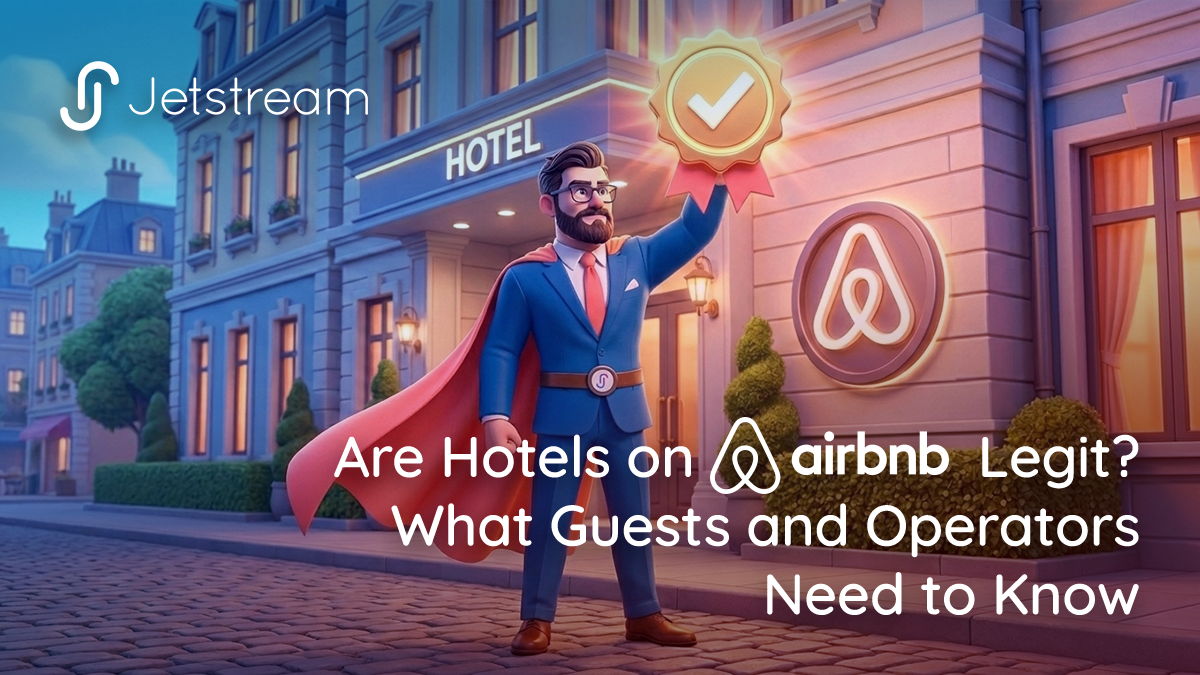
Illustration of a hotel verified on Airbnb showing are hotels on Airbnb legit with a trust verification badge

Are hotels on Airbnb legit? Yes. Airbnb has an official hotel category, complete with verification standards and professional oversight. The platform now hosts thousands of verified hotel properties worldwide. But like any online marketplace, legitimacy varies by listing. Learning to spot the real deal from scams is straightforward, and understanding why hotels are on the platform helps both guests and operators navigate this newer distribution channel confidently.

Are Hotels on Airbnb Legit?

Hotels on Airbnb are absolutely legitimate. The platform introduced its official hospitality category several years ago as an intentional expansion into the hotel market. Airbnb built this as a deliberate product offering, with dedicated verification processes and professional standards designed for commercial hospitality operators.

Airbnb's verification system for hotel listings requires legal business registration and proof of operation, professional property documentation and photos, identity verification for the account operator, compliance with local hospitality regulations, and sustained review ratings from verified guests.

When you filter for "hotel" on Airbnb's search interface, you're seeing properties that have cleared these checks. The "hotel" property type label indicates the host registered as a hospitality business, though the label alone does not confirm a higher standard of verification compared to other listing types.

That said, scams do exist on Airbnb (as they do on every marketplace). The key is knowing what separates a legitimate hotel listing from a fraudulent one. Professional branding, consistent high review counts, verified business information, and a hotel property type label are strong indicators. Legitimate hotel listings typically include dozens of high-quality photos, professional descriptions, clear cancellation policies, and reviews spanning months or years.

Why Are Hotels Listing on Airbnb?

Hotels didn't used to list on Airbnb. For years, the platform was synonymous with individual hosts renting spare rooms or vacation homes. The shift toward hotels reflects three converging market forces.

Revenue diversification is the primary driver. Airbnb's platform connects properties to 150+ million users annually. For hotels, especially smaller properties and regional chains, that's an audience they wouldn't reach through traditional distribution channels alone. Hotels already list on Booking.com, Expedia, and their own websites. Airbnb adds another revenue stream without cannibalizing direct bookings.

Guest demographic expansion matters just as much. Travelers who use Airbnb often skew younger, more adventurous, and more price-sensitive than traditional hotel guests. They plan differently. They're comfortable with platform-based booking. Hotels recognize that to reach these guests, they need to be where those guests search. A boutique hotel in a secondary market can tap into a demographic it might never reach through traditional OTA channels.

The convergence of hotel and STR distribution is reshaping how properties think about inventory. Hotels increasingly view platforms like Airbnb and VRBO not as competing channels but as complementary distribution. A 50-room property can allocate 5 rooms to Airbnb, test the channel, measure performance, and adjust. The infrastructure that powers this flexibility didn't exist a decade ago.

How to Tell if a Hotel on Airbnb Is Real

Verifying a hotel listing on Airbnb takes minutes and involves four straightforward checks.

Check the property type label. When you view a listing, Airbnb displays a property type category (Hotel, Boutique hotel, Resort, B&B, etc.). Seeing one of these labels tells you the host registered the property as a hospitality business, but it does not mean the property passed a higher level of verification than other listings. Many professionally managed hotel properties still appear as "Entire home" or "Entire apartment" depending on how the operator set up the listing. The property type label is a useful starting signal, not a guarantee of quality on its own. Use it alongside the other checks below.

Look for professional photos and consistent branding. Legitimate hotel listings include dozens of high-quality photos taken in professional lighting. You'll see the same branding, signage, and design language across multiple photos. Amateur or inconsistent photography, especially when combined with generic or poorly written descriptions, is a red flag. Professional hotels invest in photography because their reputation depends on it.

Read the reviews and review patterns. Hotel listings typically show high review counts accumulating over many months. A hotel with 50+ reviews likely has sustained operations over at least six months. Look at the review content itself. Real guests mention specific rooms, staff interactions, breakfast quality, and location details. Generic praise ("amazing place!") or suspicious patterns (all five-star ratings with one-sentence reviews) suggest potential manipulation.

Cross-reference the property name. Google the hotel's name directly. Look for an official website, phone number, and address. Legitimate hotels have an established web presence. Call the main number and ask if they list on Airbnb. This single step catches most scams. Real hotels will confirm their Airbnb presence. Scammers cannot.
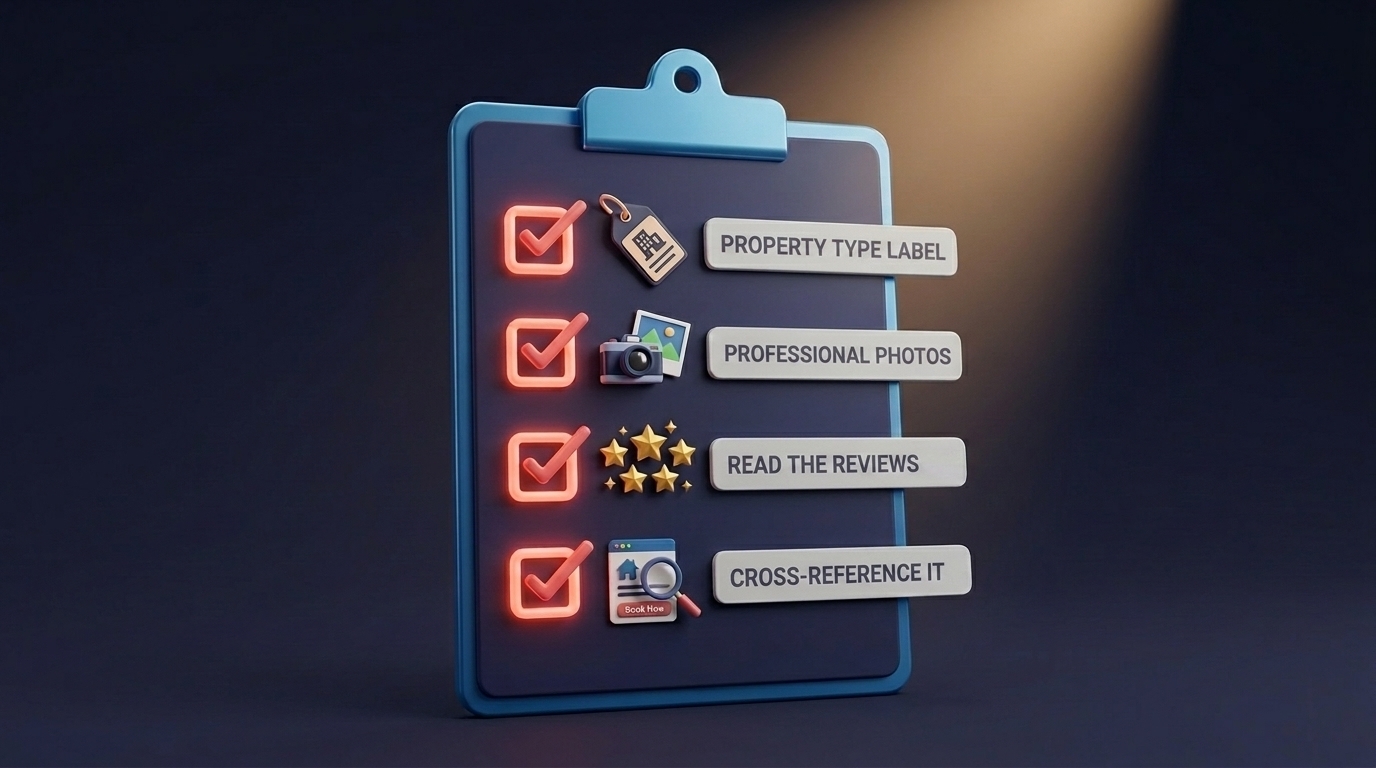
Four steps to verify if an Airbnb hotel listing is legit including badges, photos, reviews, and cross-referencing


Is It Safe to Book a Hotel Through Airbnb?

Airbnb's guest protection policies apply equally to hotel bookings and private listings. You have the same rights whether you're booking a boutique hotel or a guest bedroom.

Payment protection covers your transaction. Airbnb holds your payment until 24 hours after check-in. If the property doesn't match the listing, Airbnb can refund you. This protection applies regardless of property type.

Cancellation policies vary by listing. Some hotels offer flexible cancellation; others are stricter. The cancellation policy is clearly posted before you book. Review it carefully, just as you would when booking directly with a hotel.

The difference between booking through Airbnb versus directly mostly comes down to flexibility and dispute resolution. Booking through Airbnb gives you Airbnb's support team as an intermediary if something goes wrong. Booking directly with the hotel's website bypasses that layer. Some travelers prefer the Airbnb protection. Others prefer to deal directly with the property for potential upgrades or special requests.

Guest communication expectations are slightly different. Hotel staff typically respond to messages within hours. Airbnb messaging platforms sometimes involve delays depending on the property's setup. For urgent issues, calling the hotel directly is often faster. Legitimate hotels on Airbnb maintain both Airbnb messaging and phone contact options for this reason.

For Hotel Operators: Building Trust on Airbnb

If you're a hotel operator considering Airbnb as a distribution channel, trust is your foundation.

Set up your listing to signal legitimacy. If you need a walkthrough, this step-by-step listing guide covers the full process. Use your official hotel name, include your business registration number or license information where the platform allows, and upload professional photos across all room types and common areas. Airbnb does not allow you to include phone numbers, website links, or email addresses in your listing, so your property name and visual branding need to do the credibility work on their own. A guest who sees a professionally presented listing with a recognizable hotel name will search for you independently.

Leverage your brand and reputation, within platform rules. Airbnb actively discourages off-platform migration, so you cannot link to your website or social media in your listing description. What you can do is reference your presence on review platforms like Google and TripAdvisor by name, mention industry awards or recognitions, and write a property description that reflects your established identity. Guests who see a professional, well-branded Airbnb listing will search your hotel name on their own. The goal is to signal credibility within the listing itself, not to redirect traffic away from the platform.

Treat response time as a ranking factor, because it is. Airbnb tracks whether hosts respond to guest inquiries within one hour, and it displays that response rate publicly on your listing. Properties that consistently respond within the hour earn better placement in Airbnb's search results. Falling below that threshold pushes your listing down. This is not a suggestion; it directly impacts your visibility and bookings. Set up mobile notifications, assign a team member to monitor the Airbnb inbox during business hours, and establish a protocol for after-hours coverage. Beyond speed, be detailed and helpful. Set clear expectations about check-in procedures, amenities, and house rules so guests know exactly what to expect before they arrive.

Manage reviews actively and authentically. Ask guests to leave reviews after their stay. Respond to all reviews, both positive and critical. When you respond thoughtfully to a critical review, you show future guests that you care about improvement. Never fake reviews or incentivize five-star ratings. Authentic review patterns build far more trust than artificially perfect scores.


How Hotels Manage Airbnb Distribution Professionally

The infrastructure behind professional hotel-Airbnb integration is more complex than it appears to guests.

Hotels that treat Airbnb as a serious distribution channel use technology to sync inventory, rates, and guest information between their property management system and Airbnb automatically. Without this integration, managing availability across multiple platforms becomes chaotic. If a room sells on your website, the Airbnb listing should update in real time. If rates change seasonally, all channels should reflect that change simultaneously.

Channel managers are software platforms that handle this integration. They connect your hotel's PMS to Airbnb, VRBO, Booking.com, and other distribution channels in one unified system. Updates flow in both directions: availability, pricing, and guest information stay synchronized across all platforms. A guest books a room on Airbnb, and that room automatically blocks across your website and other channels. A cancellation on your website immediately opens that room back up on Airbnb.

This professional approach to distribution builds guest trust in several ways. Guests see accurate availability because your listing updates in real time. Rates are consistent because they pull from a unified price management system. Guest communication is efficient because staff access all booking details from one interface, regardless of which channel the reservation came from.

Hotels that manage Airbnb distribution as a side experiment, without this infrastructure, often struggle. Listings go out of sync. Guests book a room that's already sold elsewhere. Rates become confused across channels. These failures undermine the guest experience and damage the property's reputation. Hotels concerned about brand and compliance risks should consider professional oversight from the start.

Professional distribution also creates operational consistency. Staff processes are the same whether a guest booked on Airbnb, Booking.com, or your direct website. Check-in procedures, billing, and review management follow the same protocols. This consistency is invisible to guests but profoundly impacts their experience.

Are Hotels on Airbnb Legit? The Short Answer for Both Sides

For guests, hotels on Airbnb are legitimate, verified, and protected by the same platform policies that cover every other listing type. The verification steps are simple: check the property type label, review the photos, read the reviews, and confirm the property exists independently. For hotel operators, Airbnb represents a real and growing distribution channel that rewards the same professionalism you already bring to Booking.com, Expedia, and your direct website. The hotels seeing the strongest results are those that commit to the platform properly: accurate listings, fast response times, professional photography, and technology that keeps inventory synchronized across every channel. Whether you're a guest evaluating a listing or a hotel operator exploring new distribution, the legitimacy question has a clear answer. The real question is execution. For a deeper look at how the platform works for hotel operators, this complete guide to Airbnb for hotels covers setup, costs, and revenue strategy.


Hotels that treat Airbnb as a professional distribution channel, not a side experiment, consistently outperform those that don't. The right technology and operations partner can make the difference between a listing that collects dust and one that drives real revenue. If your hotel is ready to explore what STR distribution can do for your bottom line, Jetstream can help.